While lifters obsess over protein, creatine, and the latest trendy supplement, one critical micronutrient flies under the radar: selenium. This trace mineral is needed in minuscule amounts—just 55 micrograms per day—but its absence can quietly sabotage your strength gains, recovery, and metabolic health. Let's break down why selenium matters for anyone serious about building muscle and lifting heavy.
What is Selenium and Why Should Lifters Care?
Selenium is a trace mineral your body incorporates into selenoproteins—enzymes that drive essential biochemical reactions. Unlike macronutrients needed in grams, you only need a few dozen micrograms daily. But that tiny requirement masks a crucial role in three areas that directly impact your training:
- Antioxidant defense through glutathione peroxidase
- Thyroid hormone metabolism via deiodinase enzymes
- Immimmune function supporting T-cell activity and antibody production
For strength athletes, these aren't abstract biological processes. They're the machinery determining how fast you recover, how efficiently you metabolize nutrients, and how well your body adapts to progressive overload.
Selenium's Role in Thyroid Function and Metabolism
Here's where selenium gets interesting for lifters. Your thyroid hormones—specifically the conversion of thyroxine (T4) to the active triiodothyronine (T3)—directly influence your metabolic rate, energy levels, and recovery capacity. Selenium is the linchpin in this process.
The deiodinase enzymes responsible for stripping one iodine atom from T4 to create active T3 literally require selenium to function. Without adequate selenium, your body struggles to convert the inactive thyroid hormone to its active form. The result: a sluggish metabolism, diminished energy for training, and impaired tissue repair.
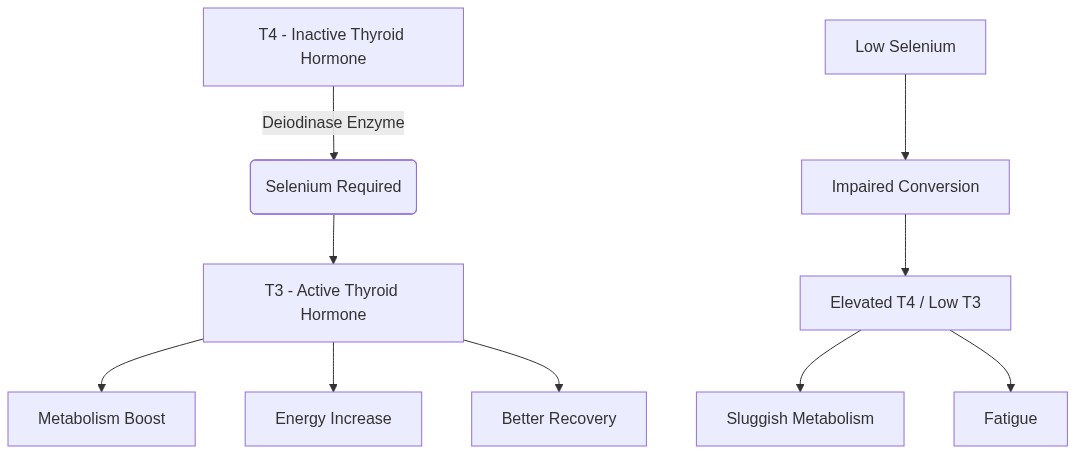
Research confirms this connection. Studies on selenium-deficient individuals show elevated T4-to-T3 ratios—meaning more inactive hormone circulating while the active form remains low. For athletes, this translates to subpar metabolic efficiency when calories and training volume are already demanding.
This matters especially during:
- Aggressive calorie deficits (cutting phases)
- High-volume training blocks
- Any period where metabolic stress is already elevated
Antioxidant Protection and Recovery
Intense resistance training creates oxidative stress. Reactive oxygen species (ROS) accumulate during heavy lifts, and while some oxidative stress is necessary for adaptation, excessive amounts accelerate muscle damage and fatigue.
Selenium's role in glutathione peroxidase makes it a first-line defender against this damage. Glutathione peroxidase neutralizes harmful peroxides before they can damage cell membranes and proteins. In practical terms: adequate selenium helps your body manage the oxidative aftermath of hard training.

A 2020 systematic review in the Journal of the International Society of Sports Nutrition examined selenium supplementation across multiple athletic populations. The researchers concluded that while selenium supplementation didn't directly improve aerobic or anaerobic performance in non-deficient athletes, maintaining adequate selenium status helped manage chronic exercise-induced oxidative effects.
Translation: if you're training hard, selenium won't make you stronger directly—but it might help you recover faster between sessions by keeping oxidative damage in check.
Muscle Health and Strength: What the Research Says
Here's the most exciting recent finding. A 2025 study published in Nutrients examined selenium's direct effects on skeletal muscle in the context of resistance training. The results were noteworthy: high-intensity resistance training combined with selenium supplementation significantly improved muscle mass and strength compared to training alone. The combination outperformed either intervention in isolation.
This aligns with earlier research suggesting selenium helps maintain skeletal muscle homeostasis and protease balance. Proteases are enzymes that break down proteins—necessary for protein turnover but potentially destructive if unregulated. Selenium-dependent enzymes help maintain the balance between muscle protein synthesis and breakdown.
The mechanism appears to involve what's being called the "gut-muscle axis." Since dietary selenium is absorbed in the intestines, gut microbiota may mediate selenium's effects on skeletal muscle health. This emerging research area suggests the bacteria in your gut could influence how effectively selenium supports your gains.
Do You Need to Supplement?
The evidence points to a nuanced answer:
For non-deficient athletes: Selenium supplementation won't magically improve performance. The systematic review found no direct ergogenic benefits in athletes with adequate selenium status.
For athletes at risk of deficiency: Those following restrictive diets, eliminating animal products, or training with extremely high volumes may benefit from attention to selenium status. Plant-based athletes especially—soil selenium content varies geographically, and plant foods reflect local soil conditions.
The key insight: Maintaining adequate selenium matters; supplementing beyond adequate levels provides no additional benefit. Think of it as foundational health infrastructure rather than a performance enhancer.
Food Sources and Getting Enough
Here's the good news: hitting your daily selenium requirement is remarkably easy if you eat whole foods.
Brazil nuts reign supreme. Just 2-3 Brazil nuts provide the full RDA of 55 micrograms. They're the most concentrated selenium food source on the planet. A handful weekly is typically sufficient.
Other solid sources include:
- Seafood (tuna, sardines, shrimp)
- Eggs
- Poultry
- Organ meats
- Whole grains (though content varies by soil)
A word of caution: More isn't better. The tolerable upper intake level is 400 micrograms daily. Excessive selenium causes selenosis—symptoms include hair loss, nail brittleness, gastrointestinal distress, and neurological abnormalities. Don't go overboard with supplements.
Practical Recommendations for Lifters
Based on the evidence, here's my take:
-
Prioritize food first. Eat 2-3 Brazil nuts several times per week. Include seafood and eggs regularly. This handles selenium for most athletes.
-
Consider testing if you're symptomatic. Persistent fatigue, frequent illness, or unexplained weakness despite adequate sleep and nutrition might warrant a blood test. Selenium deficiency is rare but possible, especially with dietary restrictions.
-
Don't supplement blindly. If you choose to supplement, start low (the typical dose in multivitamins is around 55mcg). Get bloodwork before going high-dose.
-
Think holistically. Selenium works alongside iodine and zinc for thyroid function. If you're optimizing thyroid health, don't neglect the other building blocks.
-
During cuts, pay attention. Aggressive calorie restriction can impact thyroid function. Ensuring adequate selenium (and zinc, and iodine) becomes more important when you're eating less.
The Bottom Line
Selenium isn't a sexy supplement. You won't see influencers promoting it on Instagram or find it in flashy pre-workout formulas. But it's essential infrastructure for anyone serious about strength training. It supports thyroid function (metabolism and energy), manages oxidative stress (recovery), and—when combined with resistance training—may actually enhance muscle protein synthesis.
The takeaway is simple: don't neglect your micronutrients. A diverse diet with regular Brazil nuts, seafood, and eggs covers your selenium needs. Supplement only if testing confirms deficiency. Your gains depend on getting the basics right before chasing the latest trendy compound.
References:
- Raza, S.H., et al. (2020). "The Role of Selenium Mineral Trace Element in Exercise: Antioxidant Defense System, Muscle Performance, Hormone Response, and Athletic Performance." Journal of the International Society of Sports Nutrition.
- Sun, Q., et al. (2025). "Selenium and Skeletal Muscle Health in Sports Nutrition." Nutrients.
- Articles from Sports Performance Bulletin on micronutrient needs for athletes.