Iron Supplementation for Strength Athletes
A Complete Guide to Optimizing Iron for Better Performance
1. Introduction: Why Iron Matters for Lifters
When most people think of iron, they picture tired, pale runners chugging spinach smoothies. It's pigeonholed as something for endurance athletes or people with "weak blood." But here's the uncomfortable truth: iron deficiency is one of the most underdiagnosed performance killers in strength sports, and most lifters have no idea they're walking around with suboptimal iron status.
Why should you care? Because iron does far more than prevent anemia. It's a critical component of oxygen transport, mitochondrial energy production, and muscle function. When your iron is off, your gains suffer—even if your bloodwork says you're "within normal range." This article breaks down the science of iron for strength athletes, how to test properly, and exactly what to do about it.
2. Iron's Role in Muscle Function
Iron isn't just hanging out in your blood waiting to be counted. It's working overtime in your muscles at a cellular level.
Hemoglobin and Oxygen Delivery
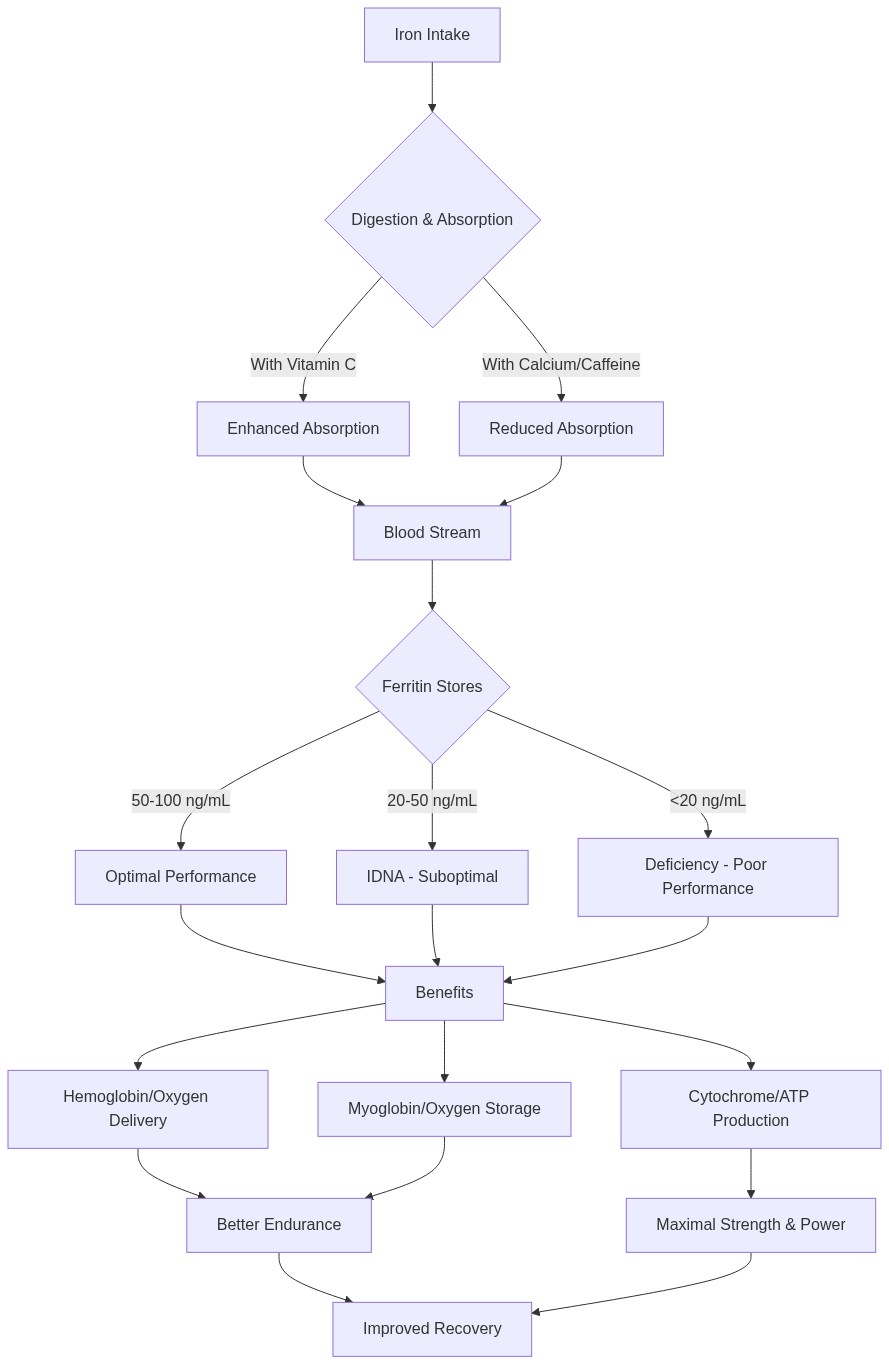
Every red blood cell contains hemoglobin, a protein that binds oxygen in your lungs and delivers it to working tissues—including your muscles. Without adequate iron, your body can't produce enough hemoglobin, and oxygen delivery suffers. The result: you get gassed faster, your endurance tanks, and your recovery slows down.
Myoglobin and Intracellular Oxygen Storage
Your muscles have their own oxygen storage system called myoglobin. This iron-containing protein holds oxygen within muscle cells, releasing it during intense contraction when blood flow alone can't keep up. Low myoglobin means your muscles are operating with an oxygen deficit, especially during heavy sets where demand exceeds supply.
Cytochrome Enzymes and Mitochondrial Energy Production
This is where things get interesting for strength athletes. Iron is a core component of cytochrome enzymes—the proteins in your mitochondria that drive the electron transport chain. This is the system that produces ATP, the energy currency your muscles use for every rep, every set, every lift.
When iron is deficient, your mitochondria can't produce energy efficiently. You're not just tired—you're literally starving your muscles of the fuel they need to generate force. This affects maximal strength, power output, and the ability to repeat efforts with short rest periods.
3. Types of Iron Deficiency in Athletes
There's more than one way to be iron-deficient, and understanding the difference is crucial.
Iron Deficiency Without Anemia (IDNA)
This is the most common form in athletes. Your hemoglobin is normal, but your iron stores (measured by ferritin) are depleted. You're not technically anemic yet, but your body is already rationing iron, prioritizing blood cells over muscle function. IDNA affects somewhere between 20-50% of athletic populations, depending on the sport and training volume.
Iron Deficiency Anemia
This is the full-blown version. Hemoglobin drops below normal, and the body can't maintain adequate oxygen delivery. Symptoms include extreme fatigue, weakness, shortness of breath, and poor exercise tolerance. This is the stage where most people finally take action—but it shouldn't get to this.
Why Athletes Lose Iron
Strength athletes aren't immune. In fact, intense training increases iron loss through several mechanisms:
- Sweat: Iron is lost through perspiration, especially in hot environments or during long sessions
- Foot strike hemolysis: Repeated impact from running and jumping causes red blood cell breakdown in the feet
- GI bleeding: High-intensity training can cause microscopic bleeding in the digestive tract
- Muscle breakdown: Intense training increases turnover of iron-containing proteins
Endurance athletes get more attention for this issue, but strength athletes training with high volume, running conditioning, or training in heat are equally at risk.
4. Performance Impact: What the Research Shows
The data on iron deficiency and athletic performance is sobering.
Anaerobic Power Reduction
Research shows that iron deficiency—even without anemia—can reduce anaerobic power output by up to 23%. That's a massive hit to your performance, equivalent to losing a significant chunk of your training stimulus.
Strength and Power Output
Studies on iron-deficient athletes demonstrate measurable reductions in maximal strength and power. The mechanism makes sense: without adequate oxygen delivery and mitochondrial energy production, your muscles simply can't generate the same force output.
Recovery and CNS Fatigue
Iron plays a role in neurotransmitter synthesis and central nervous system function. Deficiency contributes to general fatigue, reduced motivation, and slower recovery between sessions. If you're feeling perpetually run-down despite adequate sleep and nutrition, low iron could be the culprit.
The "Normal Range" Problem
Here's the dirty secret: standard bloodwork reference ranges are based on general population health, not athletic performance. "Normal" hemoglobin doesn't mean "optimal" for someone pushing heavy loads. Many athletes function below their true potential because their iron status is "good enough" to avoid a diagnosis but not optimized for performance.
5. Testing and Diagnosis
If you're serious about your performance, you need more than a basic CBC.
Key Biomarkers
- Ferritin: Your iron stores. This is the most important marker for athletes. "Normal" is typically 20-200 ng/mL, but for optimal performance, many practitioners recommend 50-100 ng/mL as a target.
- Hemoglobin: The oxygen-carrying protein in red blood cells. Important but not the whole picture.
- Transferrin saturation: Shows how much iron is available for use. Low saturation indicates functional iron deficiency even if ferritin appears normal.
- Hematocrit: The percentage of blood volume that's red blood cells. Related to hemoglobin and oxygen-carrying capacity.
When to Test
If you're a serious lifter, get baseline testing at least annually. More frequently if:
- You're training intensely (10+ hours weekly)
- You've had iron issues in the past
- You're a female athlete
- You follow a plant-based or predominantly plant-based diet
- You've had recent illness or injury
Interpreting Results
Don't just look for the red flags. Aim for the optimal zone. If your ferritin is 25 ng/mL (technically "normal"), you're likely leaving performance on the table. Work with a practitioner who understands athletic populations and can help you optimize, not just avoid deficiency.
6. Supplementation Strategies
Once you've confirmed low iron, here's how to fix it.
Oral Iron Supplements
The first line of treatment. Options include:
- Iron bisglycinate: Gentler on the stomach, better absorption. Good starting point.
- Iron sulfate: The cheapest option, but causes GI side effects in many people.
- Heme iron polypeptide: Derived from animal sources, best absorption, least GI upset. Ideal for those who can tolerate it.
Dosage: Typical therapeutic doses range from 30-100 mg of elemental iron daily. Start lower (30 mg) to assess tolerance, then increase if needed.
Timing: Take on an empty stomach when possible—food can reduce absorption by 40-75%. Vitamin C co-administration enhances absorption. Avoid taking with calcium, coffee, or tea.
IV Iron
For severe deficiency, poor oral tolerance, or when rapid correction is needed (e.g., during competition prep). IV iron bypasses the gut entirely and loads directly into circulation. This should be administered under medical supervision.
Maximizing Absorption
- Take with vitamin C (ascorbic acid)
- Avoid calcium supplements, coffee, and tea within 2 hours
- Take on empty stomach if tolerated
- Consider timing around training—some evidence suggests taking iron 2-3 hours post-exercise improves absorption
7. Practical Recommendations
Who Should Supplement?
- Athletes with confirmed low ferritin or transferrin saturation
- Those with diagnosed iron deficiency anemia
- Female athletes with heavy menstrual cycles
- Athletes following predominantly plant-based diets
Who Should NOT Supplement Without Testing
- Male athletes with no symptoms
- Anyone with normal biomarkers
- Those with conditions like hemochromatosis (iron overload)
Blind supplementation can lead to iron overload, which causes its own set of problems including organ damage and increased oxidative stress. Test first, then treat.
Protocol Summary
- Get comprehensive iron panel (ferritin, hemoglobin, hematocrit, transferrin)
- If ferritin is below 50 ng/mL, consider supplementation
- Start with 30 mg elemental iron (bisglycinate form) with vitamin C
- Re-test after 8-12 weeks
- Maintain with dietary iron or lower-dose supplementation if needed
- Target ferritin of 50-100 ng/mL for athletes
Food Sources
Heme iron (best absorption): Red meat, poultry, fish Non-heme iron (lower absorption): Lentils, spinach, fortified cereals, tofu
Combine non-heme sources with vitamin C to boost absorption. Tannins (coffee, tea) and calcium inhibit absorption—keep these separated from iron-rich meals.
8. Conclusion
Iron is non-negotiable for strength athletes who want to maximize performance. The oxygen delivery and mitochondrial energy production systems depend on adequate iron, and deficiency—even subclinical—can tank your power output, recovery, and training quality.
The solution isn't complicated: test annually, aim for optimal not just "normal," and supplement appropriately if needed. For most athletes, 30-60 mg of well-absorbed iron with vitamin C for 8-12 weeks will restore status. Re-test, adjust, and maintain through diet.
Don't let this hidden deficiency sabotage your gains. Your muscles—and your PRs—will thank you.