Electrolytes for Strength Athletes: What Actually Matters
Protein gets the glory. Creatine gets the before-and-after photos. Caffeine gets the cult following.
Electrolytes get treated like something for marathon runners and people doing hot yoga.
That is a mistake.
If you lift hard, sweat heavily, train in warm gyms, use saunas, do conditioning work, or manipulate bodyweight for competition, electrolytes matter. Not in a magical “instant PR” way, but in a very boring and very real physiology way: muscle contraction, nerve firing, fluid balance, blood volume, and recovery all depend on them.
The problem is that electrolyte advice is usually nonsense in one of two directions. One camp acts like every lifter needs a rainbow-coloured hydration powder for a 50-minute push day. The other still treats sodium like dietary plutonium. Reality, as usual, is less dramatic.
For most strength athletes, the real job is simple: understand which electrolytes matter, know when losses are actually meaningful, and replace them intelligently instead of guessing.
What Electrolytes Actually Do
Electrolytes are minerals that carry an electrical charge when dissolved in body fluids. The main ones relevant to lifters are sodium, potassium, magnesium, calcium, and chloride.
That sounds textbooky, but the practical point is straightforward: your body uses these charged minerals to move fluid around, transmit nerve impulses, and contract and relax muscle tissue. If the balance shifts too far in the wrong direction, performance starts getting weird fast.
Electrolytes are involved in:
- muscle contraction
- nerve signal transmission
- maintenance of blood volume
- fluid distribution inside and outside the cell
- regulation of heart rhythm
- temperature control during training
For a strength athlete, that means electrolytes influence things like bar speed, perceived effort, cramping risk, work capacity, and how wrecked you feel at the end of a hard session.
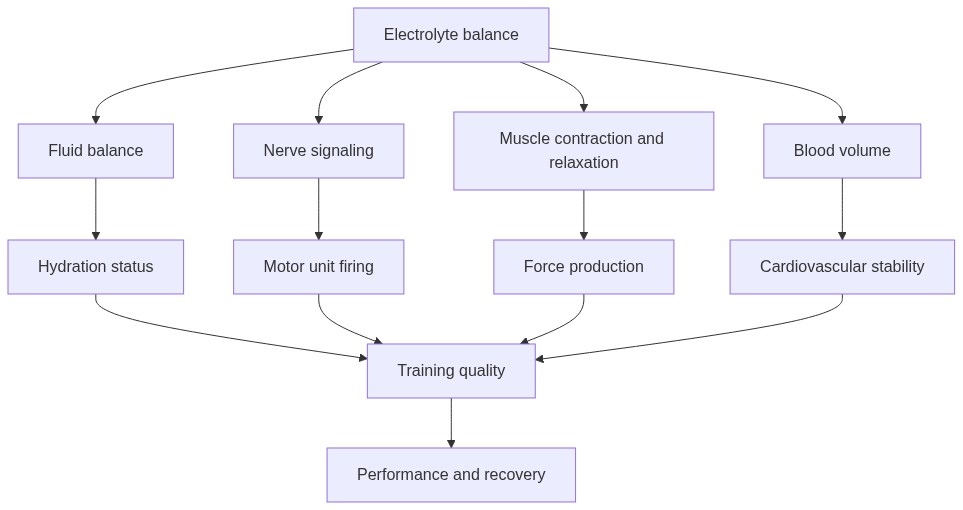
The important nuance: electrolytes do not work in isolation. Sodium affects fluid retention. Potassium helps regulate cellular electrical gradients. Magnesium helps muscles relax and supports ATP-related processes. Calcium is central to contraction. Chloride helps maintain fluid balance and acid-base regulation.
So no, this is not just a "drink more water" issue.
Sodium Is the Big One for Most Lifters
If there is one electrolyte strength athletes should understand properly, it is sodium.
Sodium is the main electrolyte lost in sweat, and it plays a central role in maintaining extracellular fluid balance, blood volume, and neuromuscular function. When sodium intake is too low relative to sweat losses and fluid intake, performance can fall off before you ever hit a clinically dramatic problem.
This is where a lot of lifters sabotage themselves. They train hard, sweat buckets, drink loads of plain water, and keep sodium artificially low because they still think “healthy eating” means bland chicken, rice, and almost no salt.
That can be fine for someone sedentary. It is often not fine for someone squatting, deadlifting, running accessories at high density, and finishing with sled pushes in a warm gym.
Signs your sodium needs may be higher include:
- you visibly salt-stain shirts or hats after training
- you cramp regularly during long or sweaty sessions
- you feel flat, weak, or headachy during hard sessions
- you get lightheaded standing up after training
- you drink a lot but still feel poorly hydrated
This does not mean everyone should blindly pound salt. It means sodium needs are contextual. A lifter training 45 minutes in a cool gym with modest sweat losses is not the same case as a 95kg athlete doing two-hour sessions in a humid warehouse gym.
A sensible middle-ground recommendation for many strength athletes is to stop fearing sodium, salt meals to taste, and consider extra sodium around training when sweat losses are clearly high.
Potassium, Magnesium, Calcium, and Chloride: Important, But Usually Less Dramatic
Potassium
Potassium works closely with sodium to maintain membrane potential and normal muscle and nerve function. It is often framed as the "anti-cramp" mineral, which is a bit simplistic, but it absolutely matters for normal neuromuscular function.
The good news is that many lifters can cover potassium needs through food if their diet is not rubbish. Potatoes, fruit, dairy, beans, yogurt, leafy greens, and meat all contribute.
The bad news is that bodybuilders on ultra-clean, repetitive diets sometimes manage to create weird nutrient blind spots while thinking they are being disciplined. If your food variety is terrible, potassium intake can drift lower than ideal.
Magnesium
Magnesium is relevant to athletes because it contributes to ATP metabolism, muscle relaxation, and a long list of enzymatic reactions. If you are deficient, performance and recovery can suffer. If you are already sufficient, taking more does not suddenly turn you into a machine.
That distinction matters. Magnesium is useful when it fixes a problem. It is not a miracle pre-workout.
Low magnesium status may show up as:
- muscle twitches
- persistent cramping
- poor sleep
- unusual fatigue
- elevated training stress perception
Calcium
Calcium is essential for muscle contraction, but most lifters eating dairy or fortified alternatives get enough. It matters, but it is usually not the bottleneck unless intake is chronically low or overall diet quality is poor.
Chloride
Chloride rarely gets headlines because it usually comes along with sodium as sodium chloride—ordinary salt. It still matters for fluid balance and acid-base regulation, but if sodium intake is adequate, chloride is usually not the thing quietly ruining your squat session.
The Real Problem Is Often Water Without Enough Sodium
Most people understand dehydration in the abstract. Fewer understand that overcorrecting with plain water can create its own mess.
When you sweat, you lose both fluid and electrolytes. If you replace only the water and not enough sodium—especially over long or very sweaty sessions—you can dilute blood sodium concentration. In severe cases this becomes exercise-associated hyponatremia, which is medically serious.
Most lifters are not hitting catastrophic hyponatremia from a normal gym session. But the underlying principle still matters: more water is not always better if it is disconnected from actual sweat losses and sodium replacement.
That is why some athletes finish training bloated, sloshy, and still somehow feeling awful.
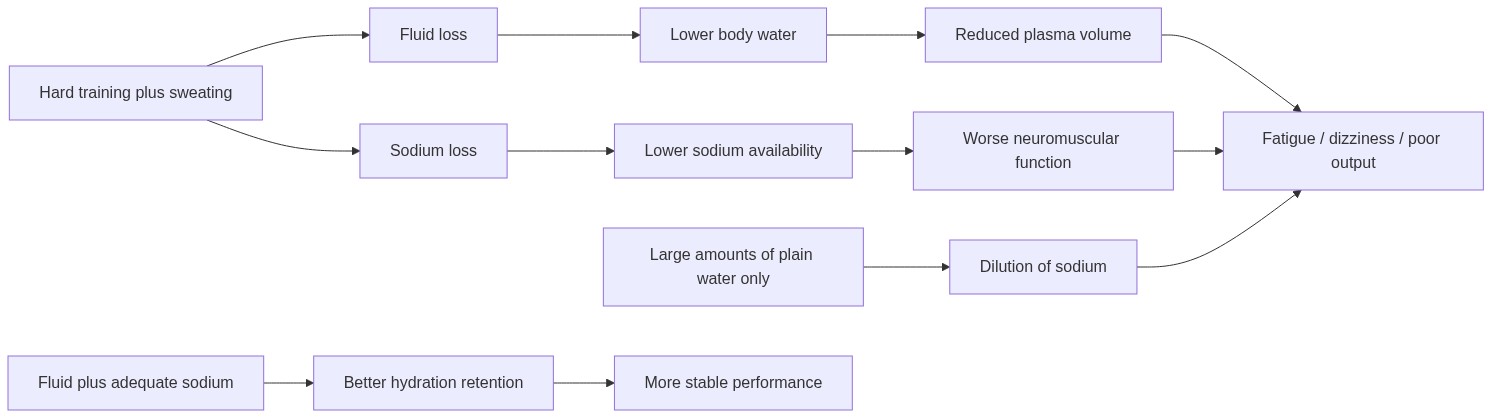
For most strength athletes, the practical lesson is this:
- short, low-sweat sessions usually only need normal hydration
- long, hot, high-sweat sessions often benefit from deliberate sodium intake
- drinking purely by habit can be worse than drinking according to thirst and context
When Strength Athletes Actually Need Electrolyte Support
This is where the topic stops being generic and becomes useful.
You probably benefit from more deliberate electrolyte intake if one or more of these apply:
1. You are a heavy sweater
Some people lose far more sodium in sweat than others. If your clothes show white salt marks, if sweat stings your eyes constantly, or if you feel noticeably worse than training partners under similar conditions, you may be on the higher-loss end.
2. You train in heat or humidity
Garage gyms in summer, poorly ventilated commercial gyms, combat-sport style conditioning blocks, and outdoor sessions all push sweat losses up fast.
3. Your sessions are long or dense
A 45-minute lift with decent rest periods is one thing. A 90- to 120-minute session with supersets, carries, and conditioning is another.
4. You use sauna, hot baths, or do extra cardio
Sweat losses do not only happen under the bar. If your overall weekly fluid and sodium losses are high, training hydration gets harder to manage.
5. You make weight for competition
Powerlifters, weightlifters, and combat athletes manipulating scale weight need to take electrolytes far more seriously. Water loading, sodium changes, and rehydration strategies are not casual topics. Get those wrong and performance falls off a cliff.
6. You are low-carb or dieting aggressively
Lower carbohydrate intake reduces glycogen storage, and glycogen binds water. Many people also lose more sodium during the early phases of lower-carb dieting. That is one reason people suddenly feel flat, weak, and headachey when cutting carbs.
Practical Protocols That Aren't Stupid
Here is the part most articles either overcomplicate or ruin with supplement marketing.
Before training
If you are normally hydrated and eating a decent diet, you do not need a ritual. But for sweaty or longer sessions, going into training underhydrated is self-inflicted nonsense.
A good baseline:
- drink normally across the day
- have a pre-training meal with some sodium
- if you are a heavy sweater, consider adding roughly 300-700mg sodium in the hour or two before training
That sodium can come from salted food, broth, electrolyte mix, or a simple homemade drink. It does not need to be fancy.
During training
For many lifting sessions under about 60 minutes, plain water is fine.
For longer sessions, hot conditions, or obvious heavy sweat losses, using a drink with sodium makes more sense than hammering plain water. Commercial products are fine if the dose is meaningful, but many are underdosed on sodium and overdosed on marketing.
A reasonable target for demanding sessions is often somewhere in the few-hundred-milligram range of sodium per litre, adjusted to sweat rate and tolerance.
After training
The easiest post-workout electrolyte strategy is food.
A solid meal containing protein, carbs, and salted whole foods does most of the job for ordinary gym lifters. Think rice, potatoes, meat, eggs, yogurt, fruit, soups, sandwiches—real food, with salt.
If you have another session the same day, have lost a lot of bodyweight in sweat, or cannot eat soon, an electrolyte drink can help speed rehydration.
Food First Beats Fancy Powders Most of the Time
The supplement industry loves turning basics into monthly subscriptions. Electrolytes are a perfect example.
Most lifters can cover the fundamentals with ordinary foods:
- Sodium: salted meals, broth, soups, cured meats, cheese
- Potassium: potatoes, bananas, oranges, yogurt, beans, leafy greens
- Magnesium: pumpkin seeds, nuts, dark chocolate, legumes, greens
- Calcium: dairy, fortified milks, yogurt, some mineral waters
Electrolyte supplements make sense when convenience matters, appetite is low, you are training in heat, or you are losing enough sweat that normal eating is not keeping up. They are tools, not a requirement for basic competence.
A simple homemade option for a sweaty session can work perfectly well: water, a squeeze of citrus, and a measured amount of salt. Not glamorous, but neither is adding five kilos to your total because you stopped turning up half-depleted.
Red Flags You Shouldn't Ignore
Mild electrolyte issues often look like “just a bad session.” Repeated patterns matter more than one-off weird days.
Pay attention if you regularly get:
- cramping during or after training
- unexplained headaches after sweaty sessions
- unusual dizziness or lightheadedness
- excessive fatigue that improves with salt and fluids
- nausea from drinking lots of plain water
- large bodyweight drops across training sessions
And the obvious serious bit: if symptoms are severe—confusion, persistent vomiting, fainting, chest symptoms, or serious neurological signs—this stops being a blog topic and becomes a medical one.
Bottom Line
For strength athletes, electrolytes are not hype—but they are also not magic.
The hierarchy looks like this:
- Get your normal daily hydration right.
- Stop treating sodium like the enemy if you train hard and sweat a lot.
- Use food first for potassium, magnesium, and calcium.
- Add deliberate electrolyte support when session length, heat, sweat rate, or competition demands justify it.
- Do not assume more water is always smarter.
If your training is short, your diet is good, and you are not a heavy sweater, you probably do not need a complicated protocol.
If you are training hard in real-world conditions and feel mysteriously flat, crampy, or under-recovered, electrolytes are one of the most boring high-leverage fixes available.
Boring, yes. Effective, also yes. Which is more than can be said for half the supplement aisle.